Hardwood Floor Cleaning in Springdale, SC
A surprising number of the calls we get start with "I think we need to refinish the floors." A surprising number of those callers are wrong. That dull, hazy look on hardwood is usually nothing but mop-product film, body oil, and fine grit lying on top of a finish that is still in good shape underneath. Take that layer off and the floor jumps years younger, and you skip the three to five dollars a square foot that sanding and refinishing would have run you. We clean hardwood with a residue-free, pH-neutral, low-moisture process: no steam, no soapy bucket, no bottled shine that ambers up a year later. Three rooms run $88, and 803-310-3848 is answered around the clock.
Where the line is between cleaning and refinishing
I want to set the expectation cleanly so you know what you are paying for. This is a deep clean. It takes off surface buildup, ground-in grit, product residue, and the everyday grime sitting on the finish. It is not a refinish. If the finish has worn through to raw wood, or there is black water staining set down into the boards, that belongs to a refinishing contractor, and you will hear that from us on the spot rather than getting charged for a cleaning that was never going to fix it.
The encouraging part is that the "needs a refinish" verdict is wrong far more often than it is right. Most floors are fine under the gunk; they just need the gunk gone.
The humidity problem, and why it dictates the method
Here is the bind hardwood is in around Springdale. Summer humidity routinely tops eighty percent and swells the boards; winter dries them out and shrinks them back. Wood is going to move with the seasons no matter what anyone does about it. So the single worst thing you can do to a floor in this climate is push extra water down into the seams between planks, where, in air this damp, it does not evaporate. It just sits. And water that sits means cupping, warping, or mold setting up underneath where you will not spot it.
That is the entire case for keeping the moisture low. Steam mops and wet mops drive liquid exactly where it must never go. Our process never lays down enough water to reach the seams. The surface is barely damp while we work, and it is dry within minutes.
How a visit runs
We open by reading the floor: solid hardwood, engineered, or laminate, and which finish is sitting on top. Most Springdale floors are polyurethane, but the older houses around Platt Springs can be hiding shellac, lacquer, or wax, and each of those wants a different approach entirely. We check for soft spots, water damage, and any finish worn through. If something needs more than a cleaning, you know before we begin.
Next comes the grit. All the fine sand, clay, hair, and dust gets lifted before a drop of moisture goes near the wood. We vacuum with soft-bristle heads and detail the edges along the baseboards and into the corners, where the grit packs in deepest. People underestimate how much that perimeter pass changes the look.
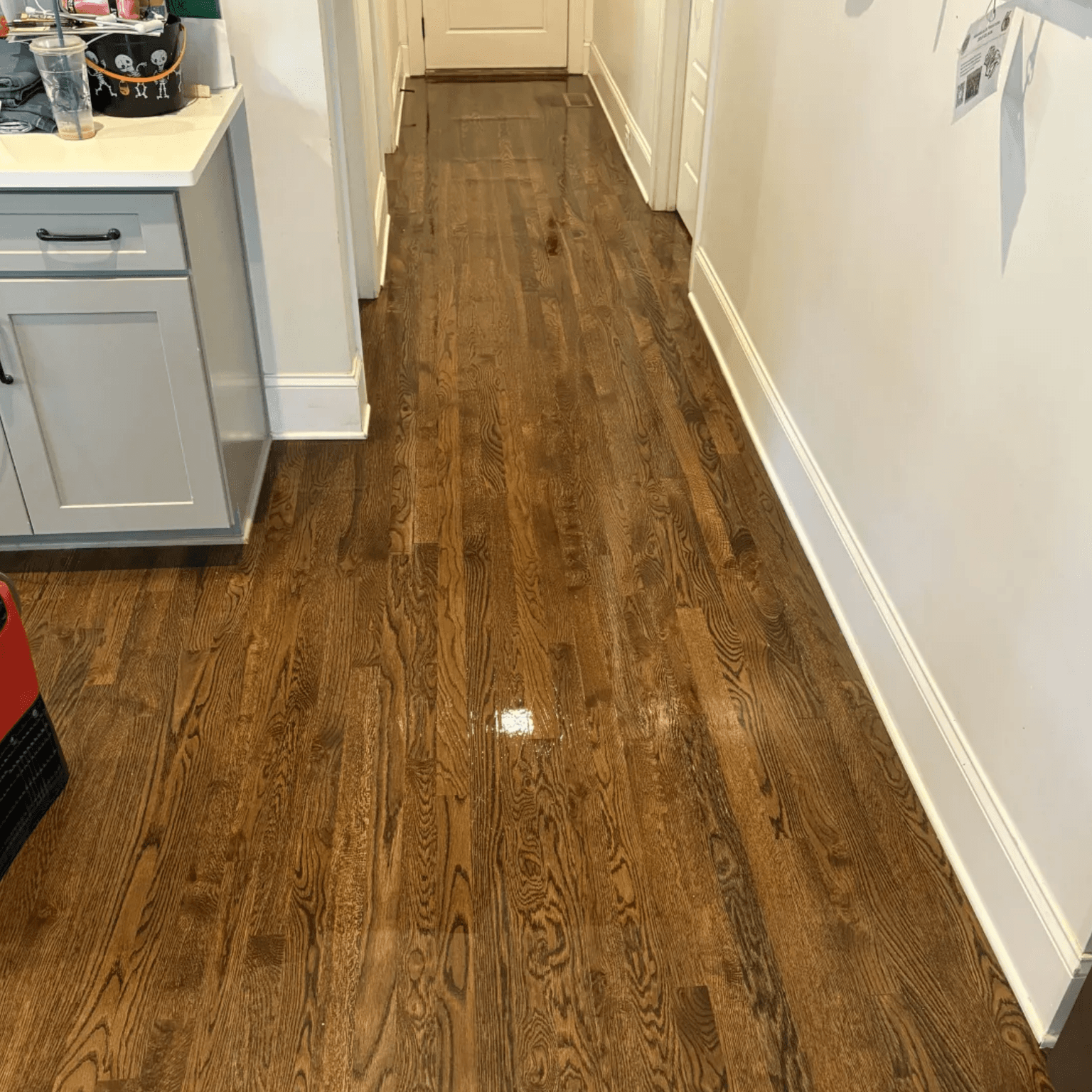
The wet pass is a light, controlled mist of pH-neutral solution, never pooled, never enough to creep into a seam, taken back up with soft microfiber pads that will not scratch. Then we put extra time into the buildup zones: in front of the kitchen sink, the main hallway lane, the entry where the shoes pile up. Years of spray-mop residue leave a tacky film there that holds new dirt like flypaper, and that is precisely where the floor looks worst and gains the most. Shoe scuffs and chair-caster marks get worked too; the ones that have not cut into the finish usually come right up.
We close with a dry-buff, no product, just mechanical buffing that evens out how the light plays across the floor, and the grain and color come back because there is no longer anything sitting between your eye and the wood. If the finish is aging but not gone, we can put down a maintenance-grade protective coat that buys it another year or two. Then we walk the floor with you and point out anything thinning or any surprise the cleaning turned up, a soft board under a rug, a worn-through patch at a threshold.
The clay angle
Red clay grit is the lead troublemaker for hardwood the same as it is for carpet, but it shows up differently. Each fine particle a footstep presses into the finish is a micro-scratch in waiting, and over a few months those add up to that dull, hazy sheen. The cleaning lifts that abrasive layer out and stops the scratching from going any further. Houses near active construction catch an extra dose, since building dust carries grit harder than the polyurethane it is grinding against.
Floors we handle
Solid oak is the most common species in Springdale houses, old builds and new alike. Heart pine turns up in the older homes, frequently under shellac or an early polyurethane. Engineered hardwood has a thinner wear layer but takes the same method. Hickory, maple, and cherry are harder species that clean predictably. Laminate is not wood at all, but the same low-moisture approach handles it. Oil-finished and wax-finished floors cannot take standard cleaners, so flag those when you call and we change tack. Quick test at home: polyurethane beads water, oil takes it up slowly, wax soaks it in and leaves a mark.
Keeping it good between cleanings
Felt pads under every chair and furniture leg stop more scratches than anything else you can do, and they need swapping out once they flatten. Put a coarse mat outside and a softer one inside each door, which matters here because so much of what tracks in is clay. Do not wet-mop. A barely damp microfiber mop with plain water is the most moisture a finished floor should ever see between professional cleanings, and if you can wring water out of the head, it is too wet. Leave the vinegar alone; the acid wears polyurethane down over time. And keep the pet nails trimmed, since long claws scratch on every scramble across the boards.
A few questions
Will this fix scratches? Surface scratches in the finish stand out a lot less once the grime around them is gone, because the grime was what made them obvious. Anything gouged down to bare wood stays until a contractor refinishes it. We show you the difference during the walkthrough.
Can you clean hardwood that has been under carpet for years? Yes. Covered floors usually carry less wear than people expect, since the carpet was shielding them. What they tend to hold is dust and sometimes pad residue that needs lifting. We look it over and tell you what cleaning can handle versus what wants refinishing.
How long does it take? The hardwood in a typical three-bedroom home runs sixty to ninety minutes. You can walk on it right away, since it is only barely damp and dry within minutes.
More on that cleaning-or-refinishing line
This page already draws the line between the two services, and there's a deeper version of it: our hardwood site's guide to where cleaning ends and refinishing begins, with tests that show which side of the line your floor sits on. Most Springdale floors we look at sit on the cheaper side.
Schedule hardwood floor cleaning
Call 803-310-3848 or book online at any hour. We clean hardwood across Springdale and the Lexington County communities on our route. Pair it with a carpet cleaning or tile and grout cleaning for a whole-house reset. Not sure what floor or finish you have? Describe it on the phone and we will work it out together.